Versatile Applications of Aluminium Extrusion Shapes in Modern Manufacturing and Construction Industries
Release time:2026-02-25 Click:11
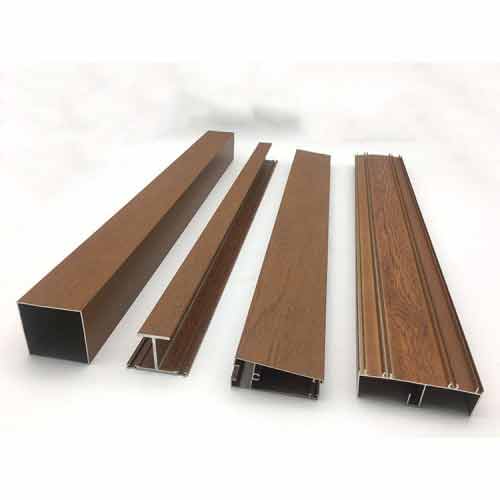
Aluminium extrusion shapes have become fundamental building blocks in contemporary manufacturing and construction, enabling the creation of complex cross-sectional profiles that combine structural efficiency with aesthetic flexibility. The extrusion process involves forcing heated aluminium billet through a shaped die under high pressure, producing continuous lengths of material with precise cross-sectional geometry that would be difficult or impossible to achieve through other forming methods. This manufacturing approach allows for the integration of multiple features into a single profile, including mounting surfaces, snap-fit connections, heat dissipation fins, and decorative elements, reducing the number of components and assembly operations required in finished products. The variety of available aluminium extrusion shapes encompasses standard architectural profiles such as T-slotted framing systems, custom industrial components, and intricate decorative moldings for consumer products.
The material properties of aluminium make it exceptionally well-suited for extrusion manufacturing and the diverse applications that extrusion shapes serve. Aluminium's favorable strength-to-weight ratio enables the production of structural profiles that provide significant load-bearing capacity while minimizing mass, a critical advantage in transportation and portable equipment applications. The natural oxide layer that forms on aluminium surfaces provides excellent corrosion resistance, allowing extrusion shapes to maintain their appearance and structural integrity in outdoor and harsh environments without protective coatings in many applications. Aluminium's excellent thermal conductivity has been leveraged in heat sink profiles and thermal management components for electronics, while its electrical conductivity supports the use of extrusion shapes in busbar and power distribution applications. The recyclability of aluminium, requiring only five percent of the energy needed for primary production, enhances the sustainability profile of products utilizing extrusion shapes.
Design flexibility in aluminium extrusion shapes is constrained by the physical limitations of the extrusion process and the metallurgical behavior of aluminium alloys during forming. Die design considerations include maintaining uniform material flow to prevent defects such as extrusion die lines, segregation, or incomplete filling. Wall thickness must be controlled to ensure adequate material flow and uniform cooling, with typical minimum wall thickness requirements scaling with profile complexity and extrusion ratio. Corner radii must be sufficient to prevent stress concentrations that could lead to cracking during extrusion or service, while sharp exterior corners may require subsequent machining or special die constructions. These manufacturing constraints require close collaboration between product designers and extrusion engineers to optimize part geometry for both functional requirements and producibility. The ongoing development of advanced aluminium alloys and improved die technologies continues to expand the capabilities and applications of aluminium extrusion shapes across industries.
Previous article:The Versatility of Aluminium Extrusion Tubes
Next article:Providing Structural Support with Versatile aluminium angle
Hot products
Mobile: +86 15097722953
Email:metalproducts2021@163.com
Email:1755383270@qq.com